

HEPA Filter
Your Leading PURO Purification Technology (Suzhou) Co., Ltd Supplier
PURO Purification Technology (Suzhou) Co., Ltd established in year 2008, is a professional factory specialized in filtration products such as HEPA filters, UEPA filters, Multimedia filters, Brush roller, PU related products etc. PURO covers an area of 2600 square meters with a total investment of 10 million CNY. We have 118 employees now with 6 professional technical engineers and R&D engineers
Why choose us
Quality control
It has testing equipment as well to guarantee the correct specification in the R&D stage and high-quality daily shipments.
Technology support
We have 118 employees now with 6 professional technical engineers and R&D engineers.
Advanced equipment
Equipped with one advanced automatic and two semi-automatic production lines to implement the lean manufactory.
Rich experience
Established in 2008, it has more than 14 years experience industry.
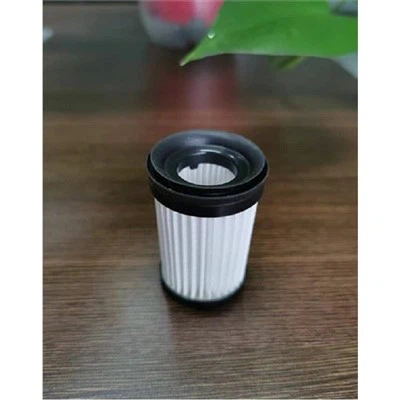
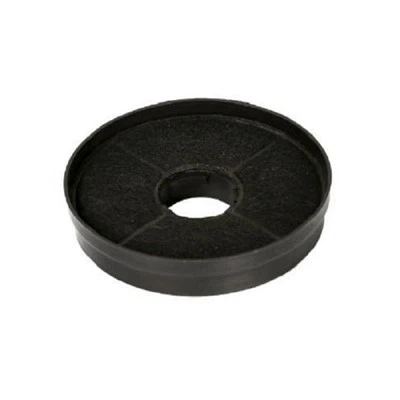
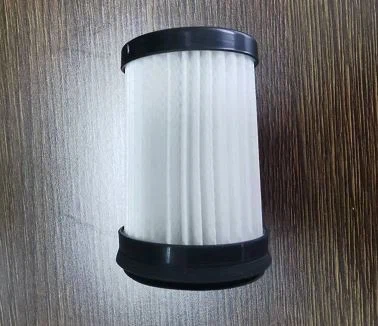
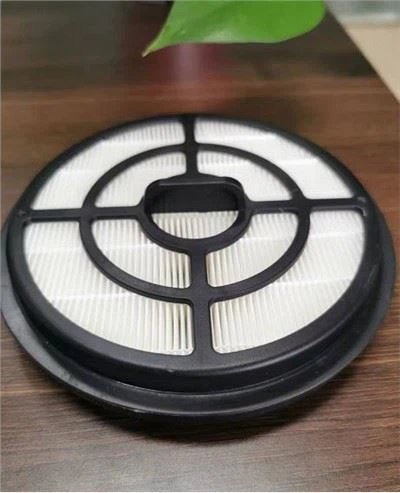


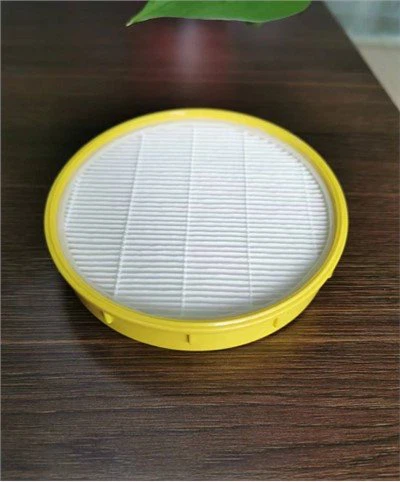
HEPA is a type of pleated mechanical air filter. It is an acronym for "high efficiency particulate air [filter]". This type of air filter can theoretically remove at least 99.97% of dust, pollen, mold, bacteria, and any airborne particles with a size of 0.3 microns (µm). The diameter specification of 0.3 microns corresponds to the worst case; the most penetrating particle size (MPPS). Particles that are larger or smaller are trapped with even higher efficiency. Using the worst case particle size results in the worst case efficiency rating (i.e. 99.97% or better for all particle sizes).

Benefits of Hepa Filter
Plumbing and HVAC
Although HEPA isn’t a common term associated with plumbing and HVAC services, it’s a great tool to improve your living space. Instead of dust and other allergens, these filters trap bacteria and pathogens that thrive and breed in your plumbing systems.
Neutralizes bad odors
Chemicals like gas and formaldehyde can spread across an enclosed space and cause a foul odor. These chemicals are typically classified as VOCs (volatile organic compounds) which you can find in air fresheners, aerosol sprays and even paint. VOCs can also cause headaches, nausea, and even breathing difficulties.
Minimizes the impact of smoking
A HEPA system can remove smoke particles and contaminants from the air. Without an air purifier, rooms will be polluted with dirty air, leaving your family members at higher risk. The smoke can further affect babies and elderly people.
Easy accessibility
HEPA filter systems are easily accessible to the public. You can find HEPA systems in various home appliances, such as air purifiers, humidifiers, vacuum cleaners, plumbing vents, and more.
There are not different types of HEPA filters: a filter either conforms to the HEPA standard, or it doesn't. This includes filters marketed as "HEPA-Like", which may look like HEPA filters externally but do not perform to the required standard. There are, however, different grades of HEPA filters, which range from H10 through H14. The higher the grade, the higher the performance.
H10 to H12 filters are sometimes known as "True HEPA" filters. They trap less particles than the higher grade filters. H13 and H14 are known as "medical grade" HEPA filters. These filter 99.95% and 99.995% of all particles down to 0.3 microns, respectively.
Medical Grade HEPA is used extensively in industries that require extremely clean environments, such as medical manufacturing facilities and electronics manufacture, because they have such a high particulate retention rate.
Application of Hepa Filter
HEPA filters are used in applications that require contamination control, such as the manufacturing of hard disk drives, medical devices, semiconductors, nuclear, food and pharmaceutical products, as well as in hospitals,homes, and vehicles.
Air Purifiers: HEPA Filter Efficiency vs CADR
So, what is most important: the filter efficiency or the CADR?
For the consumer air purifier market, the CADR (Clean Air Delivery Rate) shows the overall system performance and is the number you should focus on. It takes into account the air filter efficiency and the volume of air through the air filter.
If an air filter is 100% efficient with an air flow of 300 cfm (cubic feet per minute) the CADR is 300 (100% x 300). If the filter efficiency decreases to 99.8%, the CADR decreases to 299.4.
From a performance standpoint where it becomes more problematic is if the filter efficiency at 0.3 microns drops much lower since its ability to capture the fine particles can drop quickly. For example, if the efficiency at 0.3 microns and smaller drops to 50%, the 300 cfm air purifier would effectively only have a CADR of 150.
The other extreme is for air purifiers marketed as H14. While the filter efficiency is nearly 100%, the air flow through the filter will likely be reduced. So, if the filter efficiency is 100% and the air flow is 250 cfm, the overall CADR is 250. A better solution would be 99.8% at 300 cfm.
What's most important here is transparency into an air purifier's performance. Fortunately there is the CADR standard to give consumers a way to fairly compare performance.
How Do HEPA Filters Work
Understanding how HEPA filters work will help you understand why you should be opting for a True HEPA over a basic HEPA.
A HEPA filter is a fibrosis air filter typically made of plastic fibers (polypropylene), fiberglass, or borosilicate glass fibers. These fibers are bound closely together (often using a 5% acrylic binder) to restrict certain particles from getting through.
Most HEPA filters are mechanical and commonly paired with electrostatically charged filter media, like in electronic air cleaners, which help move the air through the filter in a two-stage process. In this two stage-process, the particulate air has an electrical power source that charges the particles that pass through the filter.
In Sanalife products, this charge is ionization, and it helps to encourage particles to bind to other particles, making them easier to capture by the air filter. The charcoal pre-filter also captures smoke, odor, harmful gases, and volatile organic compounds (VOCs), which HEPA filters can't catch. Leveraging ionization technology allows you to capture more airborne debris so that the HEPA filter can do its job more efficiently.
A HEPA filter on its own is a mechanical filter that will capture any airborne particles through a series of diffusion, interception, and impaction. The airflow, the randomness of the media filter, and the fiber types create a barrier of resistance that captures particles as the air passes through the filter.
As you can guess, a filter with more spread-out fibers won't be as effective as it would let more particles pass through.
HEPA filter media is often a non-woven fiber. Sometimes ceramic or synthetic in nature while often made from glass fiber, sheets of this non-woven fiber trap particles in four ways.
Impaction – As air flows through the filter media, larger particles (larger than about 0.5 microns) are heavy enough that while the air changes direction and flows around the fiber, the inertia of these heavier particles propels them forward, causing them to impact and stick to the filter media.
Diffusion – For the smallest particles (smaller than about 0.1 microns), they are so light they do not actually flow with air, instead diffuse through the air. Because they do not simply follow the air path around the filter fibers, they instead are most likely to impact the fiber and become trapped.
Interception – For particles not heavy enough to have inertia but not light enough to diffuse through the air stream, mid range particles follow the air stream as it goes around the filter fibers and are trapped when they touch the fiber as they pass by.
Sieving – This is what occurs when fibers are so closely spaced that particles simply cannot fit through the air space between fibers and become lodged. It works best with particles about 1 micron and larger.
The combined effect of all four methods of filtration demonstrate exceptionally high filtration of microparticles, with the weakest point being 0.3 microns. With a HEPA filter, even at this weakest point of filtration, the filter traps 99.97%.
What Are HEPA Filters Made Of
HEPA filters are typically made of a dense mat of fine fibers. The most common material used for HEPA filters is fiberglass, which is formed into a pleated or folded structure to increase the surface area for capturing particles. The fibers in the filter are usually very thin, ranging from 0.5 to 2 micrometers in diameter.
In addition to fiberglass, other materials such as synthetic polymers, polypropylene, and polyethylene can also be used to make HEPA filters. These materials are chosen for their ability to effectively capture and retain particles of various sizes.
To enhance the filtration efficiency, HEPA filters may also have a coating of chemicals or substances that can attract and trap particles, such as activated carbon or charcoal. This helps to capture odors, gases, and volatile organic compounds (VOCs) in addition to solid particles.
It's important to note that not all filters labeled as "HEPA" meet the same standards. True HEPA filters must meet specific efficiency requirements set by regulatory agencies, such as capturing at least 99.97% of particles that are 0.3 micrometers in size. So, when purchasing HEPA filters, it's advisable to look for those that are certified and meet the appropriate standards.
What Is the Difference Between HEPA Filter Grades?
HEPA filters are classified into different grades based on their filtration efficiency. The most common HEPA filter grades are HEPA H10, H11, H12, H13, and H14. Here is a breakdown of the differences between these grades:
HEPA H10: This grade has a minimum filtration efficiency of 85% for particles as small as 0.3 micrometers. It is suitable for capturing larger particles such as dust, pollen, and pet dander.
HEPA H11: This grade has a minimum filtration efficiency of 95% for particles as small as 0.3 micrometers. It provides better filtration than H10 and is effective in capturing smaller particles, including mold spores and fine dust.
HEPA H12: This grade has a minimum filtration efficiency of 99.5% for particles as small as 0.3 micrometers. It offers higher filtration performance than H11 and is capable of capturing smaller particles, including some bacteria and viruses.
HEPA H13: This grade has a minimum filtration efficiency of 99.95% for particles as small as 0.3 micrometers. It provides even higher filtration performance than H12 and is effective in capturing smaller particles, including most bacteria and some viruses.
HEPA H14: This grade has a minimum filtration efficiency of 99.995% for particles as small as 0.3 micrometers. It offers the highest level of filtration among the standard HEPA grades and is capable of capturing the smallest particles, including most bacteria and viruses.
This is a benchmark for filter performance, but there is a certain amount of trust involved. Underwriters Laboratories (UL) has their own safety standard testing procedure for HEPA filter units. So an air purifier or filter manufacturer could get their filter tested by UL, and if it passes, the purifier can bear the UL mark (typically, the letters “UL” in a circle, sometimes with the specific safety or performance standard ID listed below it).
True HEPA: A consumer air filter labeled True HEPA should conform the closest to the DOE standard for a HEPA air filter. At its highest efficiency, it should remove 99.97 percent of all particles that are 0.3 microns in size. InvisiClean, Aviano, Medify, Airthereal, Honeywell, Winix, GermGuardian and Levoit all make air purifiers labeled as True HEPA. Eureka makes vacuum cleaner filters marketed as True HEPA as well.
HEPA Type: Calling a filter a HEPA Type filter is essentially meaningless, as it does not conform to any standard. It might be nearly as good as a HEPA filter, or it might be completely ineffective.
HEPA Like: This is a variation on HEPA Type, although it is less common. It is just a marketing term, and you should not assume any filter with this label conforms to the actual HEPA standard.
Permanent HEPA: These filters are marketed as meeting the HEPA rating, but are also able to be washed and reused rather than replaced. However, we do not recommend washing HEPA filters, even if they are intended to be reused, because the washing process likely causes small amounts of damage to the filter that reduce its effectiveness over time.
Absolute HEPA– This is sometimes used to mean the same thing as True HEPA, although sometimes it appears to indicate a claim of even better filtration power, up to 99.999 percent at 0.3 microns, according to Terra Universal, a company that makes filters for vacuum cleaners.


Cases

FAQ
Q: What does a HEPA filter do?
Q: Is a HEPA filter better than an air purifier?
Q: What should I look for in a HEPA filter?
Q: Do HEPA filters remove PM 2.5?
Q: Why are HEPA filters rarely used in homes?
Q: Should I sleep with a HEPA filter?
Q: Do you really need a HEPA filter?
Q: Are indoor HEPA filters worth it?
Q: Where is the best place to put a HEPA filter?
Q: How long should a HEPA filter last?
Q: How many air purifiers should you have in your home?
Q: What do HEPA filters not remove?
Q: What is the difference between a HEPA filter and a HEPA type filter?
Q: Do HEPA filters remove vapors?
Q: Do HVAC systems have HEPA filters?
Q: Can I put a HEPA filter in my AC unit?
Q: How long does it take for a HEPA filter to clean a room?
Q: How often should I clean my HEPA filter?
Q: Why do I breathe better with air purifier?
Q: Can I vacuum a HEPA filter?
As one of the leading hepa filter manufacturers and suppliers in China, we warmly welcome you to buy custom hepa filter made in China here from our factory. All OEM&ODM products are with high quality and competitive price.
glass water filter jug, polyurethane tubes, room air purifier with hepa filter